
What counts as an emergency roof repair?
An emergency roof repair is any roof problem that allows water, wind, snow, or debris to threaten the building, its contents, or the people inside. The priority is not making the roof look finished immediately; it is controlling danger and limiting additional damage until permanent repairs are possible.
Common emergency conditions include:
- Active water entering through a ceiling, wall, attic, or light fixture
- A large section of shingles or membrane torn away by wind
- A fallen tree limb or other object striking the roof
- A sagging roof surface or ceiling
- Flashing pulled loose around a chimney, vent, skylight, or wall
- Ice-related damage, including backed-up water along the eaves
- A roof opening that exposes insulation, wiring, or interior rooms
In Gowanda, NY, emergency roof concerns may develop after strong wind, heavy wet snow, freezing rain, rapid temperature changes, or repeated freeze-thaw cycles. Older homes and buildings with several roof additions can have more complicated leak paths than the visible damage suggests.
What should residents do first?
Start with life safety, then reduce interior damage. Do not climb onto the roof during rain, snow, high wind, darkness, or icy conditions.
If water is entering the building:
1. Move people, furniture, electronics, and valuables away from the affected area.
2. Place containers under drips, but avoid standing water near electrical equipment.
3. If water is near a light fixture, outlet, appliance, or electrical panel, shut off power only if the panel can be reached safely from a dry location.
4. Look for ceiling bulges. A swollen ceiling may collapse under trapped water, so keep people away from the area.
5. Photograph the interior and exterior damage from safe locations.
Avoid touching wet electrical components, walking on wet flooring near outlets, or using ladders on slippery surfaces. A roof leak can create a serious electrical and structural hazard even when the original roof damage appears minor.
Can a roof leak be temporarily contained from inside?
Sometimes, but interior steps only control symptoms. They do not repair the roof opening.
If a ceiling is bulging with water and the power is safely off, a cautious adult may place a container beneath the lowest point and, only when there is no risk from electrical wiring or ceiling collapse, make a small opening at the center of the bulge to release trapped water. This should not be attempted if the ceiling is cracked, sagging extensively, or made from unfamiliar materials.
For a small, accessible attic leak, a container can be placed beneath the drip. Do not step on drywall or insulation, since concealed framing may not support weight. Use only solid, properly supported walking surfaces, and leave the attic if there is evidence of structural movement, exposed wiring, mold growth, or strong odors.
Should anyone place a tarp on the roof?
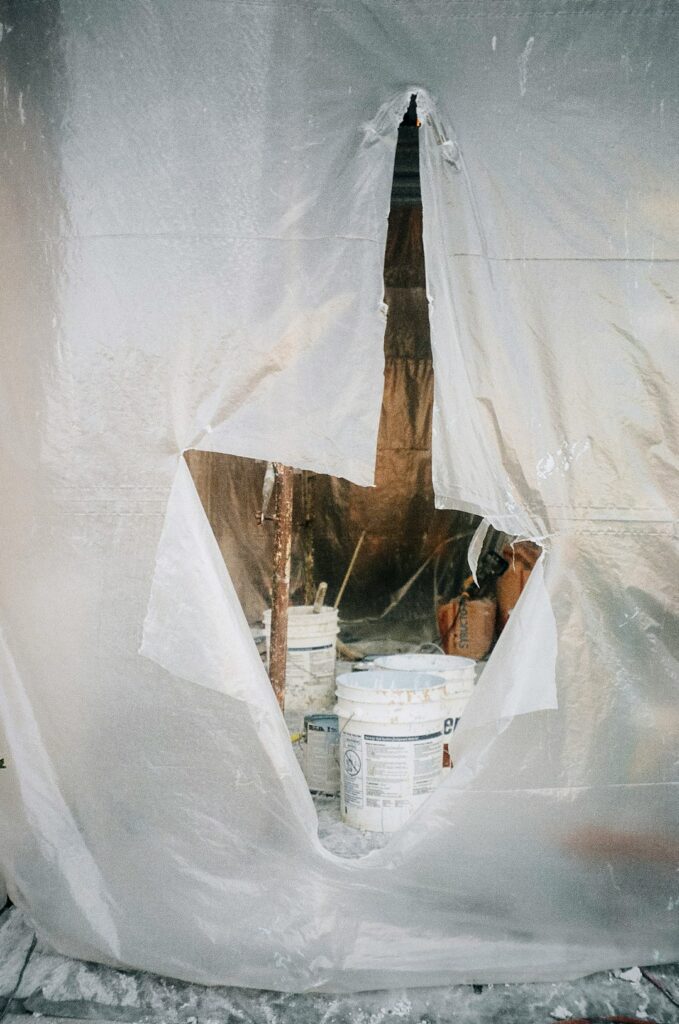
A tarp can provide short-term protection, but installing one is hazardous and may cause more damage if it is loose, improperly fastened, or placed over a weak roof section.
Roof access should be avoided when surfaces are wet, icy, snow-covered, steep, or visibly unstable. In winter, snow can conceal missing shingles, open seams, broken decking, or weak areas. A tarp should not be attached by driving fasteners randomly through shingles, because this can create new leak points and damage the roof covering.
If a roof covering has been torn away but the structure remains stable, temporary protection may be possible from a safe location using a properly sized waterproof covering and secure anchoring. Any temporary covering should be treated as short-term weather protection, not a permanent repair. Wind can turn loose tarp edges into a hazard for people, vehicles, windows, and nearby homes.
How can water damage be limited inside the house?
The fastest way to reduce damage is to control where water goes and improve airflow once the immediate danger has passed.
Use buckets, plastic tubs, and absorbent materials to catch or redirect water. Protect flooring with plastic sheeting, but avoid creating a slipping hazard. Move rugs and upholstered furniture away from the leak. If safe, open doors and use ordinary ventilation to help wet areas dry.
Do not seal a wet ceiling or wall with paint. Moisture trapped behind drywall, insulation, or trim can lead to mold, staining, wood decay, and lingering odors. Porous materials that remain soaked may need removal, especially if they cannot dry promptly.
Keep a written record of when the leak began, what weather occurred, where water entered, and what temporary steps were taken. Photographs should show both close-up damage and wider views that establish the affected area.
What roof damage should never be handled as a do-it-yourself repair?
Certain conditions require specialized equipment, training, or structural judgment. Avoid attempting repairs when there is:
- A sagging roof deck or ceiling
- A large fallen limb or tree resting on the building
- Fire, smoke, or damaged electrical wiring
- A roof edge, chimney, or wall that has shifted
- Extensive ice, snow, or freezing rain on the roof
- Damage around overhead utility lines
- A steep or multi-level roof
- A large opening exposing attic framing or interior rooms
- Suspected asbestos-containing roofing materials
- Structural damage after a major impact

Do not cut away roof framing, remove a chimney, walk on damaged decking, or use a chainsaw from a ladder. Temporary interior protection is usually safer than exterior work until conditions are stable and the hazards are understood.
How should damage be documented?
Document damage before discarding materials or beginning cleanup, unless immediate action is needed to protect people or prevent greater loss. Take clear photographs of:
- Missing or displaced roofing materials
- Damaged flashing, vents, gutters, and downspouts
- Tree limbs, fallen objects, or impact points
- Water stains, ceiling bulges, wet insulation, and damaged flooring
- Temporary coverings, containers, fans, or other protective measures
Keep receipts for emergency materials and record dates, weather conditions, and any visible changes. Documentation can help explain the sequence of events to an insurance carrier, property owner, tenant, or repair evaluator. It is also useful for distinguishing new storm damage from older staining or deferred maintenance.
What should be checked after the immediate leak is controlled?
A roof can stop leaking temporarily while hidden damage continues. After conditions are safe, inspect accessible areas for damp insulation, stained rafters, rusted fasteners, lifted flashing, and water trails. Water often travels along roof decking or framing before appearing indoors, so the ceiling stain may not be directly below the roof opening.
Check gutters and downspouts for blockage or separation, but do not climb onto an icy roof to do so. Look from ground level for missing shingles, loose metal, sagging lines, displaced ridge materials, and debris. Branches should not be pulled from a damaged roof if doing so could disturb the structure.
Permanent repairs should address the source of the entry, not merely cover the interior stain. Depending on the cause, that may involve replacing roof coverings, repairing flashing, restoring ventilation details, replacing damaged decking, or correcting drainage problems.
How can emergency roof problems be reduced before the next storm?
Routine observation helps identify weak points before they become urgent. In this climate, useful seasonal checks include looking for cracked or missing shingles, loose flashing, blocked drainage paths, moss or organic buildup, and signs of attic condensation.
Trim hazardous branches where permitted and safe, keep gutters clear, and make sure downspouts discharge away from the foundation. Store a few basic emergency supplies, such as plastic sheeting, buckets, towels, gloves, a flashlight, and a phone charger. Keep the electrical panel accessible and know how to shut off power safely.
The safest response to roof damage is controlled and deliberate: protect people first, limit interior exposure, avoid unsafe roof access, document what happened, and treat temporary measures as short-term protection rather than a complete repair.
